Furniture Placement Planning

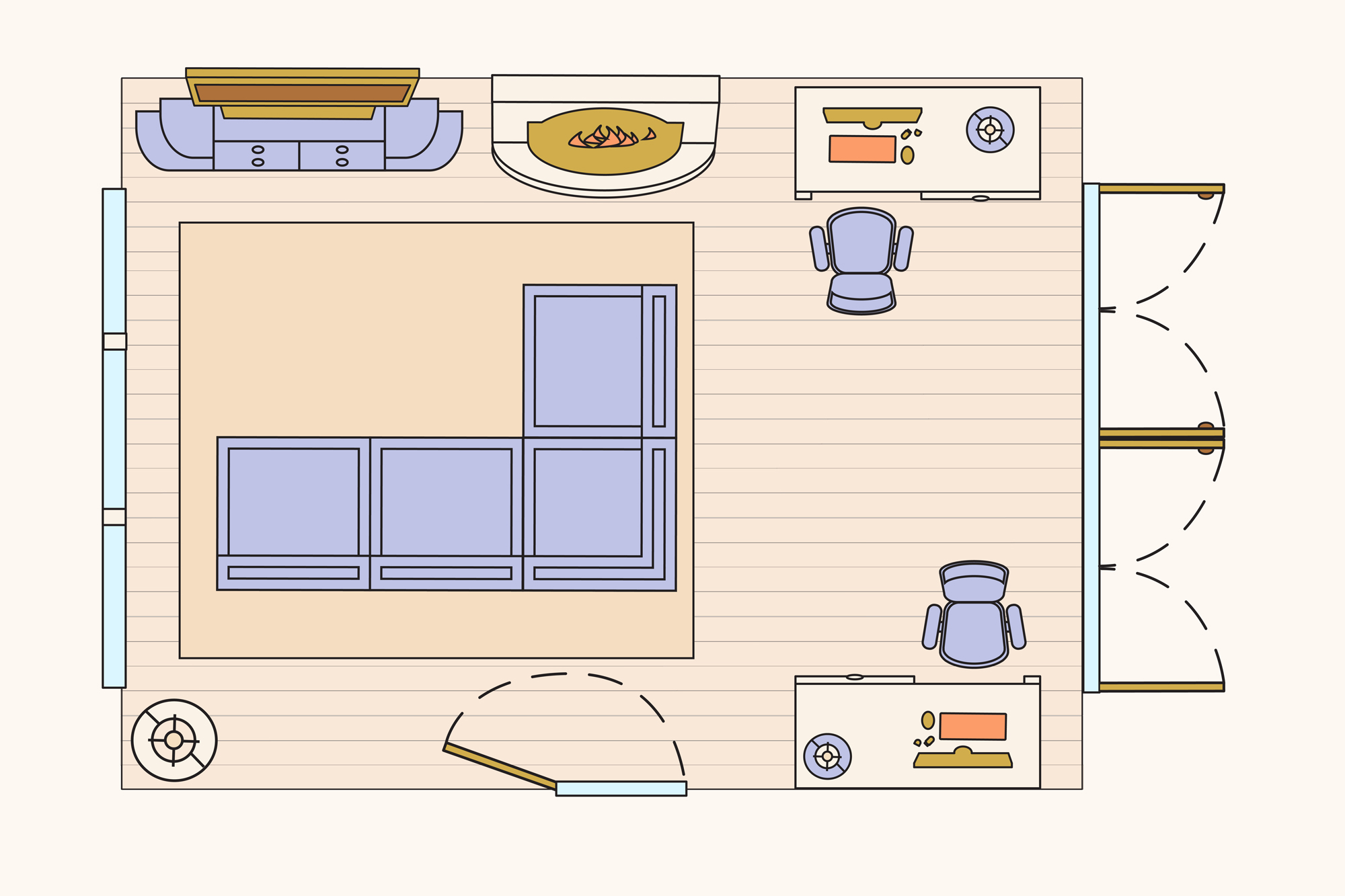
[vc_row fullwidth=”yes” css=”.vc_custom_1439546022789{padding-top: 0px !important;padding-bottom: 0px !important;}”][vc_column width=”1/2″][vc_column_text]One of the great things about moving is the chance to start over in a new place, and by using floor plans, you can create a unique space that works well for you.

With the help of some great online tools, creating that perfect new space is even easier. As I’ve mentioned in previous articles, we’re in the process of planning our next move. And since we already know what the layout of our new home will be, I’m starting to plan where everything will fit.

This is also a good project to undertake before you even begin to pack up your home to move. Knowing the size of space you’re moving into, how it’s set-up, can help determine what should move with you and what should be left behind.[/vc_column_text][/vc_column][vc_column width=”1/2″][vc_single_image image=”1885″ img_size=”full”][/vc_column][/vc_row]

Structure Drawing

[vc_row fullwidth=”yes” css=”.vc_custom_1439546022789{padding-top: 0px !important;padding-bottom: 0px !important;}”][vc_column width=”1/2″][vc_column_text]A structural drawing, a type of engineering drawing, is a plan or set of plans and details for how a building or other structure will be built.
The structural drawings are primarily concerned with the load-carrying members of a structure.

The structural plan drawings show the foundation, floor, and roof plan of the building.

These plans provide information like size and location of the structural elements present in the respective plans.

Type of structure drawing
1. Footing detail drawing
2. Coloumn drawing
3. Plinth drawing
4. Lintel drawing
5. Beam drawing
6. Rcc slab drawing

1.FOUNDATION (FOOTING) DRAWING- A foundation is the element of a structure which connects it to the ground, and transfers loads from the structure to the ground.
Foundations are generally considered either shallow or deep.

2.COLOUMN DRAWING-A column can be defined as a vertical structural member designed to transmit a compressive load.
A Column transmits the load from ceiling/roof slab and beam, including its own weight to the foundation.

4.LINTEL DRAWING-A lintel is a beam placed across openings like doors, windows etc. in buildings to support the load from the structure above.
Windows and doors are not made to be structural members of the home. When an opening is made in a home,
there is a concentrated load above the doorway or window opening that must be supported.

5.BEAM DRAWING-Beams are usually horizontal structural elements that carry loads perpendicular to their longitudinal direction.

6.RCC SLAB DRAWING-R.C.C. refers to Reinforcement cement concrete. A concrete slab is a common structural element of modern buildings, consisting of a flat, horizontal surface made of cast concrete.[/vc_column_text][/vc_column][vc_column width=”1/2″][vc_single_image image=”1887″ img_size=”full”][/vc_column][/vc_row]

3D Architectural Miniature

[vc_row fullwidth=”yes” css=”.vc_custom_1439546022789{padding-top: 0px !important;padding-bottom: 0px !important;}”][vc_column width=”1/2″][vc_column_text]An architectural model is a type of scale model – a physical representation of a structure – built to study aspects of an architectural design or to communicate design ideas.

Depending on the purpose, models can be made from a variety of materials, including plastic, paper, and wood, and at a variety of scales. models are also used to communicate your vision for the building to clients. Building a physical architectural model has been so successful.

Types of models include:

1.Exterior models are models of buildings which usually include some landscaping or civic spaces around the building.

2.Interior models are models showing interior space planning, finishes, colors, furniture and beautification.

3.Landscaping design models are models of landscape design and development representing features such as walkways, small bridges, pergolas, vegetation patterns and beautification.

Landscaping design models usually represent public spaces and may, in some cases, include buildings as well.[/vc_column_text][/vc_column][vc_column width=”1/2″][vc_single_image image=”1888″ img_size=”full”][/vc_column][/vc_row]

3D Layout Plan

[vc_row fullwidth=”yes” css=”.vc_custom_1439546022789{padding-top: 0px !important;padding-bottom: 0px !important;}”][vc_column width=”1/2″][vc_column_text]3D floor plans are innovative plans that bring out the building to a virtual reality mode to emphasis a bird’s eye view. It has gained more attention as you can see the entire building and predict accurately 3D floor plans represent the Architectural layout more realistically than 2D plans.

“What it will look like.”
3D floor plans are created based on three-axis such as x, y, and z with full view, 360-degree coverage.

Benefits of using a 3D floor plans.

1.it becomes easy to make changes where required as you have virtually imagined how the building will look like once constructed. These plans give out more intricate details of a building interior with walls, doors, windows, furniture entities, flooring etc,

2.Visual Impact is high:Architectural 3D floor plans is visually more attractive than a simple plan drawing. The 3D plan visualizes the colour, materials, design more eminently than a 2D floor plan. Instead of symbols for furniture and fixture we can actually see 3d models or entities of fixtures like sofa, bed, wardrobes, chairs, tables etc.[/vc_column_text][/vc_column][vc_column width=”1/2″][vc_single_image image=”1890″ img_size=”full”][/vc_column][/vc_row]

Residential & Commercial Planning

[vc_row fullwidth=”yes” css=”.vc_custom_1439546022789{padding-top: 0px !important;padding-bottom: 0px !important;}”][vc_column width=”1/2″][vc_column_text]1) What are the floor plans?
– A floor plan is a (normally 2D) visual representation of the layout of a house or other architectural structure. They are created from a birds eye view of each of the levels of a building. The floor plan consists of the layout of all the rooms, staircases, patios, balconies etc. on each level, and will often have bits of furniture from each room as well. A floor plan will have specific lines and symbols to represent things like windows, doors, stairs, voids etc.In short, it is an architectural depiction of a building.

– A floor plan helps plan and decide how to form rooms in the available space and organize it to give it an impressive look on the whole when seen from the top.

Floor plans are quite constructive for office, home, and real estate.

A floor plan is a (normally 2D) visual representation of the layout of a house or other architectural structure. They are created from a birds eye view of each of the levels of a building. The floor plan consists of the layout of all the rooms, staircases, patios, balconies etc. on each level, and will often have bits of furniture from each room as well. A floor plan will have specific lines and symbols to represent things like windows, doors, stairs, voids etc.

2) Why are floor plans important?
More than just displaying the property in the form of blueprints, purchasers rather lookout for a floor plan that gives a clear view of the property and how they can utilize the space effectively. Floor plan makes your planning process so easy that you need not want to waste your time in organizing and executing a process.

Floor plan uses accurate scale, and hence, you must add the right measurements in manageable sizes of all add-ins like kitchen units, wardrobes, and bathroom fittings. It helps an adequate understanding of a property, outlook, interaction of space, and how the flow goes on. Floor plan helps in making any structural alterations to the buildings if needed, such as adding new rooms, creating space for a garden, or even knocking down a wall. Is the home you are residing is of an outdated style? You can now update them with today’s lifestyle, and floor plan will be of great help.

3) How to read a floor plan?
The curved triangle-looking things in each room represent doors. Depending on what side the curved side is in, depends in which way the door opens. The black lines represent walls, however they do not always represent the thickness of each wall. The white gaps with a line in them, which are located in the black lines (walls), represent windows / ventilations. The arrow in the staircase represents the way of the staircase.[/vc_column_text][/vc_column][vc_column width=”1/2″][vc_single_image image=”1892″ img_size=”full”][/vc_column][/vc_row]

×